


 3 min read
 10.16.2025


 11.20.2025
 10 min read
Andrew Shepard is a roulette specialist with more than ten years of field experience. He covers international markets across Europe, Asia-Pacific, and the Americas. At Daybet.biz, he leads content on strategy testing, simulators, and game mechanics.

Political betting is the practice of wagering on the outcomes of political events, primarily elections, referendums, the passage of legislation, party leadership contests, and parliamentary seat contests. Although it has become more relevant, it is, in reality, a long-standing phenomenon. Practically, bookmakers create a betting market that poses a specific question, for instance, “Will Republicans get a majority in the House in the upcoming election?” This, in turn, creates a platform for the political expression of will in a predictive format.
With the polarizing nature of political races and the advent of online platforms, it is unsurprising to observe a “gamblification” trend. Media and analysts are discussing political betting more frequently, and odds are considered alongside classical polls, viewing them as an additional indicator of public opinion. Political prognostication is no longer a business exclusive to polling and media organizations. Bookmakers and prediction exchanges are becoming increasingly involved, signifying the ever-growing importance of betting in modern politics.
Placing wagers on political events is a seasoned activity. A few noteworthy cases date back to the 1190s in the United Kingdom. Another bet was recorded in 1503 and was referred to as "an old practice," even then, with wagers on who would be the newly appointed Pope. However, the activity only took on its contemporary format in the early 20th century.
Some early examples of the legalization of betting shops can be traced back to 1960 in Great Britain and 1958 in Northern Ireland, with licenses issued in 1961 and 1959, respectively. These events led to political wagering's greater mass appeal due to its accessibility, but according to some sources, political bets had already taken place even before the events mentioned above. Gambling on the composition of the next parliament was prevalent during the interwar years, especially on the Stock Exchange, The Economist claims.
UK bookmakers claimed nearly £1,000,000 (more than $25 million today) in placed wagers in 1964, indicating the market's considerable growth, with approximately 9/10 of the wagers on British internal races and 1/10 on the U.S. presidential elections of that year. By 1965, the market had expanded to offer betting on German electoral procedures, underscoring the trend of globalization.
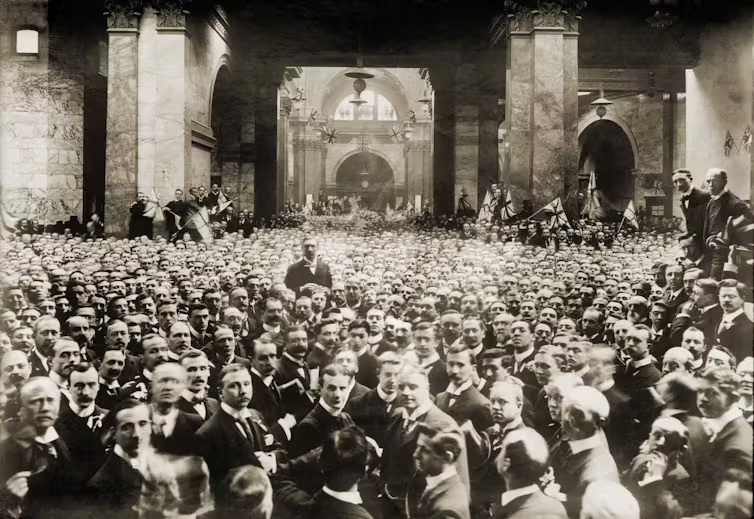
The establishment of the Iowa Political Stock Market in 1988 signified the beginning of the contemporary era of political wagering. However, only a few hundred traders were involved, dealing with unpretentious stakes. Diversification emerged with the introduction of companies such as Sporting Index and IG Index, among others, alongside the advent of spread betting in the 1990s.
The latest grand evolution happened when political wagering entered the digital world. With the introduction of iGaming came virtual sportsbooks, such as bet365.com and sporting-life.com, alongside virtual exchanges like Global Betting Exchange, Flutter, and Betfair Exchange. Thanks to the accessibility of these electronic platforms, the market for political wagering has grown significantly during the past few decades.
Political betting is similar to sports betting, but how are they different? Wagering on political events requires a deep analysis and understanding of complex cultural, social, and economic aspects, unlike regular sports betting, where the factors to consider are far less complex. Recent news scandals, traditional opinion polls, voting behavior precedents, and political patronage are just a few characteristics that directly influence the potential odds and results.
Let's delve deeper into some of the political wagering’s unique characteristics to gain a better understanding of its prospects and potential challenges.
One fascinating characteristic of political wagering is its potential for making precise predictions, which occasionally outperforms traditional polling. Take, for instance, the 2024 U.S. presidential election. Prediction markets indicated that Trump's chances of winning the election were significantly higher than conventional poll results, with a margin of 67% to 33% in Trump's favor. Classic polls suggested no significant differences in candidates' chances, except for the margin of error in a few swing states.
The CEO of Polymarket claims that Donald Trump's odds skyrocketed to 95% at 11:43 p.m. ET on the night of the election, indicating a clear win. This occurred almost six hours before the Associated Press's official announcement of the election winner. President Trump's team is rumored to have become sure of their candidate's win via Polymarket's odds before any official announcements.
Betting on politics is constantly scrutinized by regulatory bodies in various jurisdictions, which presents its fair share of obstacles. In early October 2024, the U.S. federal court ruled in favor of the Kalshi prediction market in its case against regulators who kept it from offering event contracts. For the first time, the American people could legally place bets on the outcomes of their elections.
Following the court victory, Kalshi and similar platforms now have carte blanche on election contract markets in the U.S., which will inevitably lead to significant shifts in the political betting landscape in one of the world's largest markets. President Trump's expected pro-crypto and anti-regulation positions have the potential to amplify those shifts even further.
Several ethical concerns related to political betting have recently been discussed. Betting trivializes the election process, shifting the focus from civic duty to entertainment and making democracy transactional. Risks of manipulation are also present, as significant bets can skew odds, potentially leading to the spread of misinformation or causing financial harm to the platform's users.
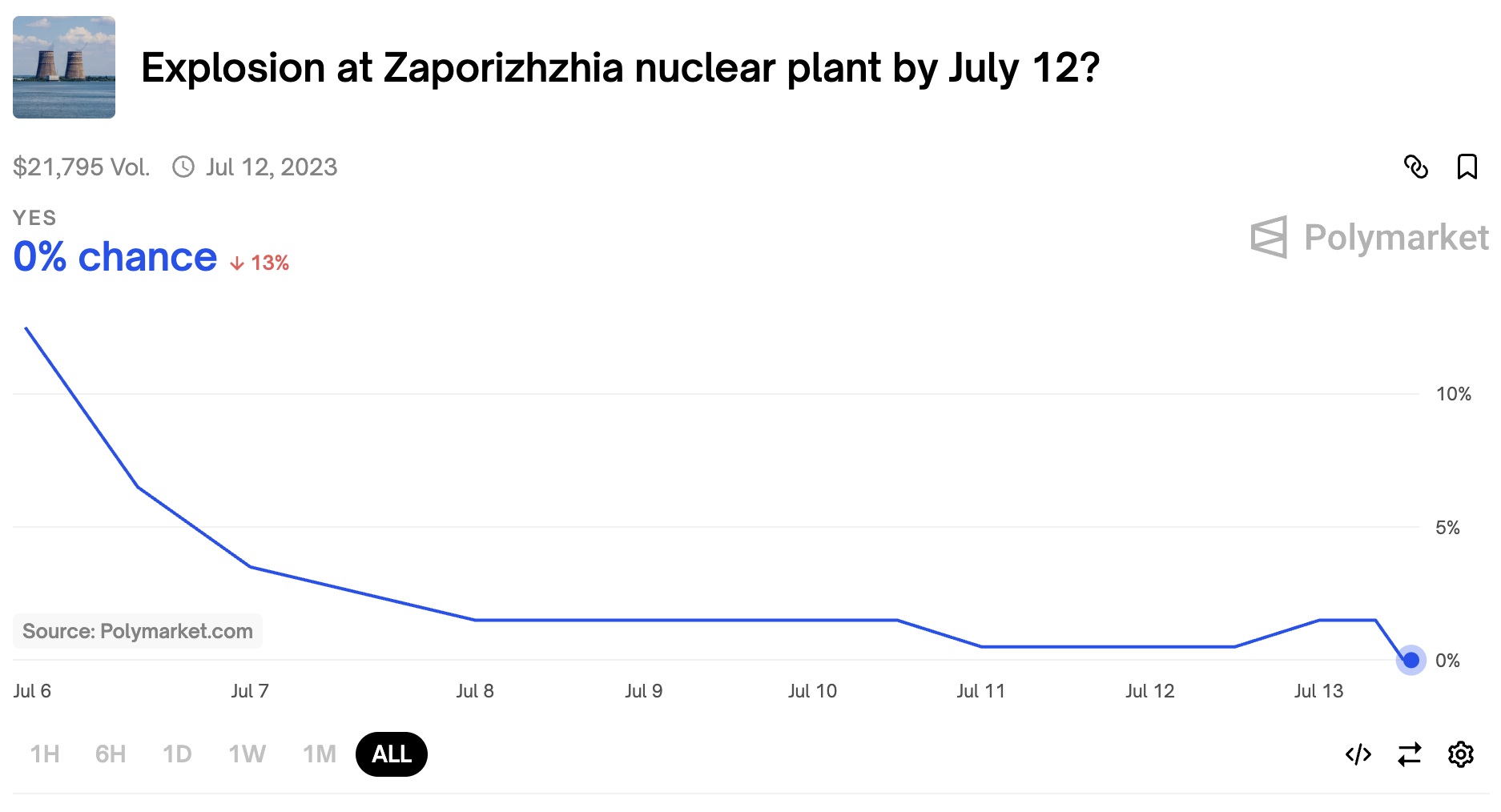
Another ethical concern involves betting on sensitive topics, such as military actions and disasters. Many people interpret such markets as an attempt to exploit human suffering. A recent example involves Polymarkets' offers on the Russo-Ukrainian war, with markets ranging from a possibility of a ceasefire deal being reached to a potential nuclear disaster at the Zaporizhzhia atomic power plant.
Furthermore, political wagering can be used to influence public opinion by celebrities and journalists, not to mention the classic risks of addiction associated with any form of gambling. Some experts and lawmakers call for transparent and regulated frameworks to preserve democratic values amidst the current trend of "gamblification" in politics.
Now that we've covered political wagering, its history, and its distinctive features, let's review a few prominent platforms that offer political betting markets, focusing on their market reach, regulatory status, and standout attributes.
Polymarket is a decentralized prediction market run on cryptocurrency (USDC on Polygon). Since its launch in 2020, the platform has seen expeditious growth, with over $3.7 billion wagered during the 2024 U.S. presidential election. However, due to legal pressure from the CFTC, it had to withdraw all of its operations in the U.S. Global operational reach (excluding the U.S.) and the introduction of Nate Silver as its high-profile advisor are among the platform's key attributes.
Founded in July 2021, Kalshi is a CFTC-regulated exchange with its headquarters in the United States, offering event contracts, including those related to politics. After being approved for election markets in October 2024, it executed more than $1 billion in election trades that year. It is supported by investors such as Sequoia and is intended for U.S. citizens.
Betfair is a British betting exchange established in 2000. It has a global presence, particularly in the UK and Europe. It is overseen by the UK Gambling Commission and matched more than £116 million on the 2024 U.S. election. Its exchange model, which permits back and lay bets, provides better odds.
| Platform | Market Reach | Regulatory Status | Standout Attributes |
|---|---|---|---|
| Polymarket | Global (excl. U.S.), $3.7B 2024 | Blocked in the U.S. since 2022, offshore | Decentralized, crypto-based, with Nate Silver as advisor |
| Kalshi | U.S.-based, $1B+ 2024 trades | CFTC-regulated, legal for U.S. elections | First regulated exchange in the U.S., diverse markets |
| Betfair | Global, strong UK/Europe, £116M 2024 | UKGC licensed, multi-jurisdictional | Betting exchange model, long history, reputation |
As we have already pointed out, political wagering is a long-standing phenomenon that has witnessed its fair share of historical occurrences. Let’s review a few documented political betting cases considered significant for their time that continue to affect the market today.
One well-documented case of political wagering dates back to the 16th century, when affluent families in Italy and the Vatican bet on who would become the next pope. The odds fluctuated based on rumors, the candidate's backing and prestige, and their health. These underground markets established models for contemporary prediction markets by fusing political intrigue with financial speculation.
Politicians have occasionally used wagering on politics to their advantage. One such instance involved Clement Freud, a member of the UK Liberal Party, who in 1973 placed multiple bets on his candidacy to decrease the odds and, in turn, attract media attention to help himself gain office. He also gambled on the UK's 1979 general election for a remarkable six-figure payout.
A recent noteworthy case involves a highly controversial $7 million Ukraine mineral deal market. Polymarket has been criticized for incorrectly resolving the market as "Yes," despite no agreement having been reached between Trump and Ukraine. Potential manipulation concerns were raised, suggesting the involvement of a major holder of Polymarket’s UMA governance tokens who voted in favor of the platform's position. The loss of trust created by this incident may influence the future of prediction markets.
In our opinion, the phenomenon of political wagering and the introduction of online betting exchanges, with their innovative approach to creating topical markets, have demonstrated that the trend of “gamblification” can extend into numerous other facets of life. Take pop-cultural betting, for example, with markets such as “Will GTA VI be released in 2025?” already existing, which would be considered highly improbable 10 years ago.
With proper regulation and an optimized framework to minimize the previously outlined risks, and considering the apparent trend of growth in turnover at betting exchanges worldwide, political betting has a good chance of becoming an integral part of para-political activity in the future. As absurd as it might sound today, we might see Kalshi among the official sponsors of the Republican candidate 20-30 years from now.
Roulette Guides. Casino News. Weekly Updates.
 @
@

 3 min read
10.16.2025
3 min read
10.16.2025
 5 min read
07.21.2025
5 min read
07.21.2025

 10 min read
07.09.2025
10 min read
07.09.2025
 5 min read
07.08.2025
5 min read
07.08.2025
 10 min read
06.30.2025
10 min read
06.30.2025
 3 min read
06.12.2025
3 min read
06.12.2025
 10 min read
06.10.2025
10 min read
06.10.2025
 5 min read
06.04.2025
5 min read
06.04.2025
 10 min read
06.04.2025
10 min read
06.04.2025
 10 min read
06.03.2025
10 min read
06.03.2025
 10 min read
05.28.2025
10 min read
05.28.2025
 5 min read
05.28.2025
5 min read
05.28.2025
 5 min read
05.16.2025
5 min read
05.16.2025

 10 min read
05.13.2025
10 min read
05.13.2025
 5 min read
05.05.2025
5 min read
05.05.2025
 10 min read
04.30.2025
10 min read
04.30.2025

 5 min read
04.14.2025
5 min read
04.14.2025
 10 min read
04.11.2025
10 min read
04.11.2025
 12 min read
04.04.2025
12 min read
04.04.2025
 5 min read
03.27.2025
5 min read
03.27.2025
 10 min read
03.13.2025
10 min read
03.13.2025

You finished <b>[place]</b> among [total_players] players. Tournament results are calculated based on UTC time.

You finished <b>[place]</b> among [total_players] players. Tournament results are calculated based on UTC time.

It is great to see that gambling remains just entertainment! To keep it that way:
Continue playing wisely – you are a good example of a healthy approach to gambling.

It seems you are doing fine, but small red flags are already appearing. Try:
The sooner you act, the easier it is to stay in control.

The test showed that gambling might be becoming a problem. What you can do right now:
You are not alone. Help works, and the first step changes more than it seems.


