








How Makarov-Biarritz Strategy Works
The basic principles of the system consist of the following:
- Choose a number and place a straight bet. It can be any number.
- Continue betting on the same number for the next 36 spins.
- If you win within 36 spins, choose another number, and do the same.
- If you don't win after 36 spins are completed, choose another number, and do the same.
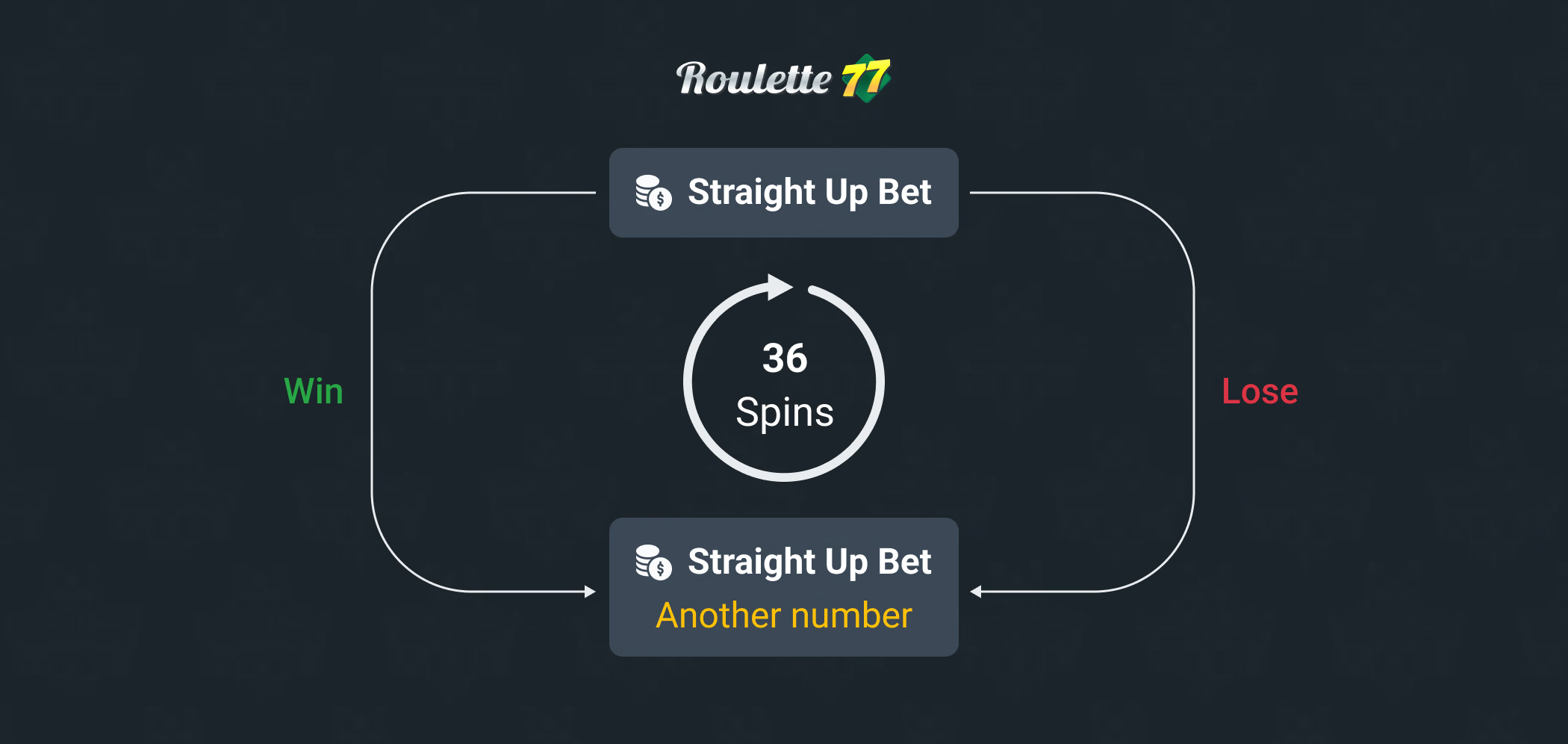
Some sources state that you should complete 35 or 37 spins instead of 36, but whichever you choose, the basic principles do not change. What is being tried to be done here is simple: in single-zero roulette, the probability of a selected number not appearing 36 times in a row is 37.19%. So, the probability of the number you choose appearing within 36 spins is 62.81%. This strategy gives you a 62.81% chance of winning if you simply choose a single number and wait long enough for that number to appear.
Our Test of Makarov-Biarritz Strategy
This strategy may be a good example of “gambler's fallacy”. We will explain what this means below, but first let's test the strategy with a simulation as we always do. In the simulation we created for this system, we used 10 players, gave each of them a $50 bankroll, and had them place a $1 wager for a straight bet. As the strategy required, they completed 36 spins in total. The results were:
| Spin | p1 | p2 | p3 | p4 | p5 | p6 | p7 | p8 | p9 | p10 |
|---|---|---|---|---|---|---|---|---|---|---|
| 1 | 50 | 50 | 50 | 50 | 50 | 50 | 50 | 50 | 50 | 50 |
| 2 | 49 | 49 | 49 | 85 | 49 | 49 | 49 | 49 | 49 | 49 |
| 3 | 48 | 48 | 48 | - | 48 | 48 | 48 | 48 | 48 | 48 |
| 4 | 47 | 47 | 47 | - | 47 | 47 | 47 | 47 | 47 | 47 |
| 5 | 46 | 46 | 46 | - | 46 | 46 | 46 | 46 | 46 | 46 |
| 6 | 45 | 45 | 45 | - | 45 | 45 | 45 | 45 | 45 | 45 |
| 7 | 44 | 44 | 44 | - | 80 | 44 | 44 | 44 | 44 | 44 |
| 8 | 43 | 43 | 43 | - | - | 43 | 43 | 43 | 43 | 43 |
| 9 | 42 | 42 | 42 | - | - | 42 | 42 | 42 | 42 | 42 |
| 10 | 41 | 41 | 41 | - | - | 41 | 77 | 41 | 41 | 41 |
| 11 | 40 | 40 | 40 | - | - | 40 | - | 76 | 40 | 40 |
| 12 | 39 | 39 | 39 | - | - | 39 | - | - | 39 | 39 |
| 13 | 38 | 38 | 38 | - | - | 38 | - | - | 38 | 38 |
| 14 | 37 | 37 | 37 | - | - | 37 | - | - | 37 | 37 |
| 15 | 36 | 36 | 36 | - | - | 36 | - | - | 36 | 36 |
| 16 | 35 | 35 | 35 | - | - | 35 | - | - | 35 | 35 |
| 17 | 34 | 34 | 34 | - | - | 34 | - | - | 34 | 34 |
| 18 | 33 | 33 | 33 | - | - | 33 | - | - | 33 | 33 |
| 19 | 32 | 32 | 32 | - | - | 32 | - | - | 32 | 32 |
| 20 | 31 | 31 | 31 | - | - | 67 | - | - | 31 | 31 |
| 21 | 30 | 30 | 30 | - | - | - | - | - | 30 | 30 |
| 22 | 29 | 29 | 29 | - | - | - | - | - | 29 | 29 |
| 23 | 28 | 28 | 28 | - | - | - | - | - | 28 | 28 |
| 24 | 27 | 27 | 27 | - | - | - | - | - | 27 | 27 |
| 25 | 26 | 26 | 26 | - | - | - | - | - | 26 | 26 |
| 26 | 25 | 25 | 25 | - | - | - | - | - | 25 | 25 |
| 27 | 24 | 24 | 24 | - | - | - | - | - | 24 | 24 |
| 28 | 23 | 23 | 23 | - | - | - | - | - | 23 | 23 |
| 29 | 58 | 22 | 22 | - | - | - | - | - | 22 | 22 |
| 30 | - | 21 | 57 | - | - | - | - | - | 21 | 21 |
| 31 | - | 20 | - | - | - | - | - | - | 20 | 20 |
| 32 | - | 19 | - | - | - | - | - | - | 19 | 19 |
| 33 | - | 18 | - | - | - | - | - | - | 18 | 18 |
| 34 | - | 17 | - | - | - | - | - | - | 17 | 17 |
| 35 | - | 16 | - | - | - | - | - | - | 16 | 16 |
| 36 | - | 15 | - | - | - | - | - | - | 15 | 15 |
- Players 2, 9, and 10 did not win any spins.
- Player 4 was lucky enough to win on the first spin: he made a profit of $35.
- Players 1, 3, 5, 6, 7, and 8 were able to get a profit too. However, since they could not win as quickly as Player 4, their profits were less.
Pitfalls of Μakarov-Biarritz System
This system comes from a time when roulette was only played in real casinos and gamblers were superstitious. In roulette, all probabilities are reset with each spin. Whether an outcome has occurred (or not) before does not affect future possibilities in any way. In single zero roulette, your chance of winning a straight bet is always 2.70%, no matter how many spins you complete. Just because you have completed 36 spins before, or even 360 spins, does not mean you will get a higher or lower odds on the next spin.
The Μakarov-Biarritz system can work in card games, where each round reduces the number of cards in the deck and the odds become more calculable the longer the game goes on. For example, you start the game with a deck of 52 cards and by the second round, there will be at least 48 cards left in the deck: the odds will change.
However, there is no such thing in roulette. The odds never change because each spin is made with 37-38 numbers. This means that, barring statistical deviations, your chances of winning (and therefore, the house edge) will not change in the long run.
Conclusion
You can of course try this system, as all you have to do is choose a number, place a straight bet on it, and complete 36 spins: the strategy does not require anything more than that. For the same reason, you are not taking any risks. More precisely, you only take the risk of a straight bet, nothing more.
However, this system may make you believe that your chances of winning will gradually increase, or your chances are higher than they are as a result of incorrect use of mathematics. Don't make this mistake: if you're placing a straight bet, your chances of winning will always be the same no matter how many spins are completed and will never go above 2.70% (2.63% in double-zero roulette).


